 We typically inherently trust in the products we’ve known our whole lives, products that we’ve learned to trust. We know that when we go to McDonald’s our cheeseburger will taste the same as it did previous time. We know that when we need the answer to something, Google is going to be able to find us the answer. What happens when one of those brands begins to betray our trust? Over the course of the last few years, Johnson & Johnson has done just that. Last week we learned we can’t always trust the brands that have become a household name.
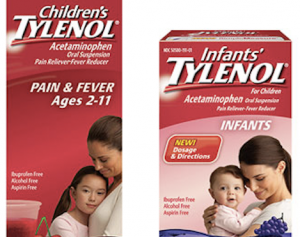
Last Tuesday, Johnson & Johnson plead guilty to selling liquid medicine contaminated with metal. It began in 2009 when a consumer found “black specks” at the bottom of her Infant’s Tylenol, which turned out to be nickel and chromium. Next came far reaching recalls involving hundreds of millions of bottles and packages of consumer brands like Tylenol, Motrin, Rolaids, Benadryl, and other products, all due to faulty manufacturing. By 2010, the company had launched mass recalls of certain children’s over the counter medicines, including Infant’s Tylenol and Children’s Motrin.
The result was Johnson & Johnson seeing their first declines since World War II. According to the U.S. Department of Justice, as of March 10, the company agreed to pay $25 million to resolve the case. The plea agreement is an attempt to “close a chapter” and rectify their old reputation for quality and dependability. The company also agreed to further safety measures before reopening their Fort Washington, PA facility, where the transgressions occurred.
Johnson & Johnson essentially spent $25 million to save a reputation that most Americans have grown up with. Time will tell if the public can forgive a company who it trusted with the care and well-being of their families. It will definitely be an uphill battle for the company. In the end, we all learned the lesson that not everything in life is infinite or untouchable, everything has the potential to tumble. We can all be held accountable.

